
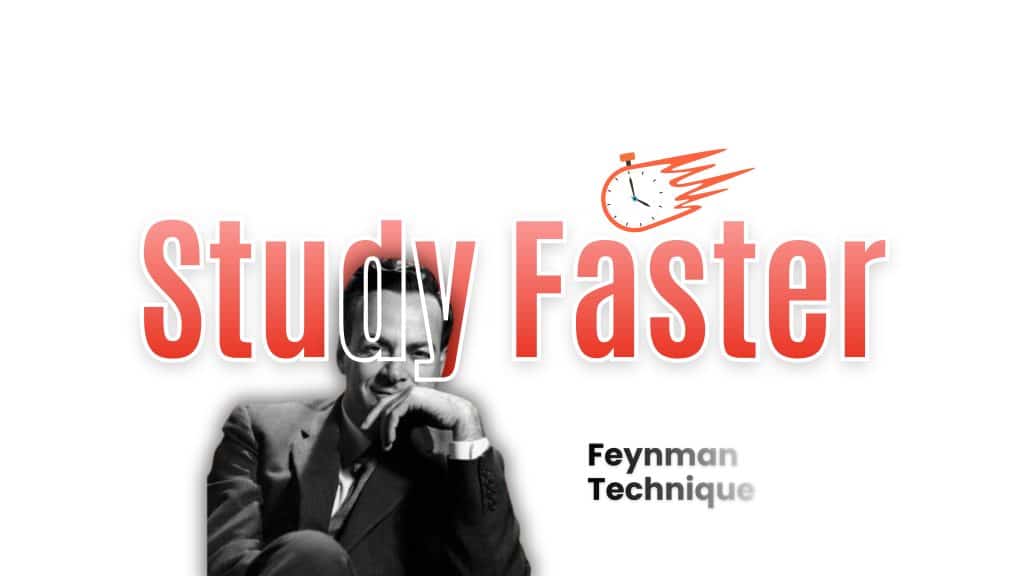
Richard Feynman was one of the greatest physicists of the 20th century. His secret wasn’t genius—it was a learning technique so simple anyone can use it.
Most learning methods are about memorizing facts and definitions. You read something, highlight it, try to remember it. But genuine understanding is different. Understanding means you can explain something clearly in simple language. If you need complex terminology to explain something, you probably don’t understand it yet.
This is the core of the Feynman Technique. It’s a four-step process that forces genuine comprehension instead of surface-level memorization. Named after physicist Richard Feynman, this technique has become one of the most powerful learning methods for mastering any subject.
The Four Steps
Step 1: Choose a Concept and Write What You Know
Pick something you want to truly understand. Get a blank piece of paper and write the concept name at the top. Then write everything you know about it. Use different colors for new information as you discover it. Don’t worry about being perfect or complete. Just dump out your current understanding.
Step 2: Teach It to Yourself or Someone Else
Here’s where the real learning happens. Explain your topic as if you’re teaching it to a 12-year-old. Use simple language. No jargon. No technical terminology. If you need complex words to explain something, it means you haven’t understood it deeply enough yet.
The goal isn’t to sound smart. The goal is to communicate clearly.
✗ Wrong Approach
“Chlorophyll absorbs photons and initiates electron transfer”
✓ Right Approach
“Plants eat sunlight by catching light energy with special green stuff in their leaves, and that energy is used to turn water and air into food”
If possible, actually teach it to someone else. The act of explaining to another person forces different organization and clarity than just talking to yourself. But even teaching yourself out loud works.
Step 3: Identify Gaps and Return to Source Material
As you teach, you’ll hit walls. You won’t know how to explain something. You’ll realize there are pieces missing from your understanding. These gaps are gifts—they show you exactly what you need to study more.
Go back to your textbook, lecture notes, or whatever source material you’re using. Study specifically the concepts that tripped you up. Fill the gaps. Then return to Step 2 and try explaining again.
This cycle of explaining → finding gaps → studying → explaining again is where the deep learning actually happens. Each cycle strengthens your understanding and expands your ability to explain.
Step 4: Simplify and Create Analogies
Review what you’ve written. Make it even simpler. Remove unnecessary words. Cut complicated sentences into shorter ones. The goal is a clear, simple explanation that anyone could understand.
Look for analogies too:
- Photosynthesis is like a solar panel
- Memory is like a filing cabinet
- Chemical reactions are like cooking recipes
Analogies make abstract concepts concrete and easier to remember.
Why This Actually Works
The Feynman Technique works because it forces active learning instead of passive memorization. Instead of just reading information and assuming you understand, you’re actively using your brain to organize and explain the material.
When you explain something, you have to retrieve information from memory and organize it coherently. You have to think about how different pieces fit together. You have to communicate it clearly. All of this is cognitive work that creates learning.
It also forces you to confront the difference between recognition and recall. When you read something, it looks familiar. This feels like understanding, but recognition is much weaker than genuine comprehension. When you have to explain something from memory, you can’t fake it. Your gaps become obvious immediately.
How to Use This for Different Subjects
Technical Subjects (Math, Physics)
Use concrete examples. When explaining a calculus concept, work through a specific problem. When explaining a physics principle, describe how it works in a real situation.
Historical or Literature Topics
Create narrative. Tell the story. Explain the causes and effects. Connect events to each other. Understanding history means seeing how events fit together into a coherent narrative.
Language Learning
Translate concepts into the new language and explain them. Try to explain abstract concepts without using complex words. This mirrors what a child learning the language would do.
Scientific Subjects
Focus on the mechanism. Not what happens, but why it happens. What’s the actual process? What causes what?
Common Mistakes to Avoid
Using technical terminology when you don’t fully understand. If you’re using fancy words to sound smart, you’ve missed the point. The goal is clarity, not complexity.
Stopping at Step 2. Just explaining once isn’t enough. The real learning happens in the cycles of explaining, identifying gaps, studying, and explaining again. Commit to multiple cycles.
Skipping the writing step. Writing is crucial. Writing forces you to organize your thoughts more clearly than thinking alone. Don’t skip it.
Real-World Application
Use it when preparing for important exams. Work through each major concept using the four steps. You’ll discover exactly what you understand well and what needs more study.
Use it when learning new skills at work. Break down the skill into components and explain each one simply. This accelerates your competence.
Use it when teaching others or writing explanations. The clearer your explanation, the more genuinely you understand the topic.
The Bottom Line
The Feynman Technique is deceptively simple, but it’s incredibly powerful. It forces genuine understanding instead of surface memorization. It makes your knowledge gaps obvious so you can target your studying. And it builds knowledge that’s actually usable in real situations, not just knowledge that passes tests.
The technique doesn’t require special tools or resources. It just requires a pencil, paper, and willingness to sit with the discomfort of not fully understanding something. That discomfort is exactly where learning happens.