
Cramming the night before an exam feels productive, but your brain forgets most of it within days. Spaced repetition fixes this permanently.
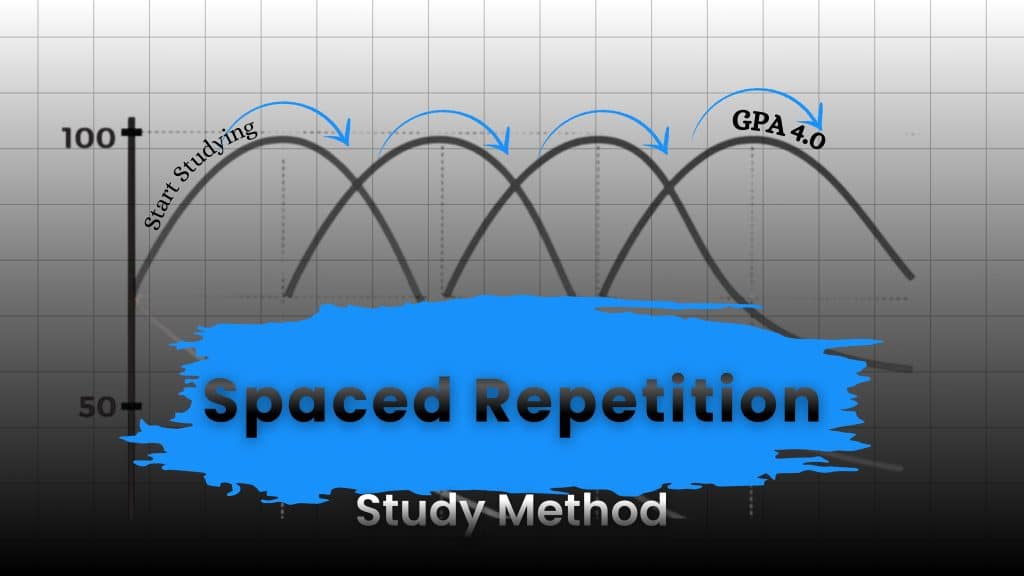
There’s a harsh truth about learning: without reviewing material, you forget it. A lot. German psychologist Hermann Ebbinghaus discovered this in 1885 when he created the Forgetting Curve—a graph showing how quickly we lose information when there’s no attempt to remember it.
But here’s what makes spaced repetition so powerful: it works directly against this forgetting curve. Instead of cramming all your studying into one marathon session, you review information at gradually increasing intervals. And the science shows it’s dramatically more effective than traditional studying.
Understanding the Forgetting Curve
Imagine you learn something new. Without any review, your brain forgets about 50% of it within one day. After a week with no review? You’ve lost most of it. But Ebbinghaus also discovered something critical: if you review the material right before you’re about to forget it, your brain treats that information as important and reinforces the memory.
This is where spaced repetition comes in. By strategically reviewing information at the exact moment you’re about to forget it, you interrupt the forgetting curve and push the information deeper into long-term memory.
The key insight is this: your brain needs time to form the neural connections around new information. Those connections can’t form if you’re repeating something 20 times in one day. But when you spread those reviews out over time, your brain has space to consolidate the memory and make it stick.
How Spaced Repetition Actually Works
The mechanics are straightforward but incredibly powerful. When you review material, your brain has to actively retrieve it from memory. This retrieval strengthens the memory itself. Here’s the crucial part: the more effort your brain has to exert to retrieve something, the stronger that memory becomes.
By increasing the intervals between reviews, you’re forcing your brain to work harder each time.
Review Timeline Example:
- First review:
1 dayafter initial learning - Second review:
3 daysafter the first review - Third review:
7 daysafter the second review - Fourth review:
21 daysafter the third review
Each time, your brain has to work a bit harder to pull that information back, and each time, the memory gets stronger.
The Science: What Research Actually Shows
Research shows that spaced repetition is incredibly effective. Studies comparing spaced practice to massed practice (cramming) show that spaced repetition results in:
- 60-90% better long-term retention compared to cramming
- Improved ability to apply knowledge to new situations
- Faster recall when you actually need the information
- Learning that lasts months or even years (not just days)
- Reduced cognitive load during study sessions
One landmark study found that 5 reviews spread across a week are more effective than 10 reviews crammed into one day. Your brain isn’t built for cramming. It’s built for spacing.
Real-World Implementation
So how do you actually use spaced repetition in your study routine?
The 1-3-7-21 Rule
Review new material after:
1 day3 days7 days21 days
After these four strategic reviews, the information typically sticks in long-term memory.
Digital Tools Make It Easy
Apps like Anki, Quizlet, and RemNote are all built on spaced repetition principles. You add information, the app shows you items you’re struggling with more frequently, and items you know well less frequently. The algorithm handles the spacing automatically.
You can also implement spaced repetition manually with flashcards or by scheduling specific review sessions. The key is consistency. You need to stick to your schedule even when things feel boring or repetitive. That’s literally when the learning is happening.
Combine Spaced Repetition With Other Techniques
Spaced repetition alone is powerful, but combining it with other evidence-based methods amplifies the effect dramatically.
Pair with Active Recall: Instead of passively reviewing notes, actively test yourself. Force your brain to retrieve the information. This makes the spaced repetition sessions far more effective.
Combine with Elaboration: When you review material, don’t just re-read it. Explain it in your own words. Connect it to things you already know. Write out why it matters. This creates stronger neural pathways than passive review ever could.
Use with Interleaving: Instead of studying one topic deeply before moving to the next, mix different topics within the same study session. This helps your brain distinguish between concepts more clearly.
Why Spaced Repetition Feels Weird at First
When you first start using spaced repetition, it feels less productive than cramming. During a cram session, you feel like you’re learning because it’s intense and overwhelming. Spaced repetition feels easier and slower. This is actually a sign it’s working.
Your brain isn’t working as hard during each individual review session, which means you’re not as fatigued. But the learning is deeper and more durable. It’s the difference between short-term performance and long-term mastery.
The Bottom Line
Spaced repetition isn’t flashy or exciting. It’s just consistently reviewing material at increasing intervals. But it’s one of the most scientifically validated learning techniques available. If you care about actually remembering what you learn—not just passing the next test but retaining knowledge for your career and life—spaced repetition is non-negotiable.
The best time to start was yesterday. The second best time is today.